1. Introduction
Strawberries are the most cultivated berry fruit worldwide, with an annual production of 13.3 million tons, on a surface area of 522,527 ha. Strawberries have intrinsic characteristics including the presence of bioactive compounds with a nutraceutical effect. Consumption of diet rich fruits and vegetables is associated with reduced incidences of chronic pathologies including obesity, infections, cancer, and cardiovascular and neurologic diseases
| [6] | Giampieri, F.; Tulipani, S.; Alvarez-Suarez, J. M.; Quiles, J. L.; Mezzetti, B.; Battino, M. (2012). The strawberry: Composition, nutritional quality, and impact on human health. Nutrition, 28, 9–19. |
[6]
. Berries, including strawberries, have high phytochemical content
| [15] | Sabbadini, S.; Capocasa, F.; Battino, M.; Mazzoni, L.; Mezzetti, B (2021). Improved nutritional quality in fruit tree species through traditional and biotechnological approaches. Trends Food Science and Technology. 117, 125–138. |
[15]
. Numerous scientific studies confirm that the strawberry contains bioactive molecules with antioxidant power, such as ascorbic acid, polyphenolic compounds such as ellagic acid, ferulic acid, and some flavonoids (antho-cyanins, catechins, phenolic acids, etc.). These compounds exhibit a nutraceutical effect, exerting beneficial and protective properties on the human body
| [4] | Capocasa, F.; Balducci, F.; Di Vittori, L.; Mazzoni, L.; Stewart, D.; Williams, S.; Hargreaves, R.; Bernardini, D.; Danesi, L.; Zhong, C.-F.. Romina and Cristina (2016): Two new strawberry cultivars with high sensorial and nutritional values. International Journal of Fruit Science, 16:(1) 207–219. |
[4]
.
The cultivated Strawberry (Fragaria x ananasa variety Chandler) is a highly appealing, delicious, and nutritious fruit known for its distinct and pleasant flavor. It has a unique place among cultivated berry fruits
| [3] | Britannica, T. (2020). Editors of Encyclopaedia. In Argon. Edinburgh: Encyclopedia Britannica. |
[3]
. Fragaria species belongs to family Rosaceae with basic chromosome number of x-7. This hybrid species, developed from the crossbreeding of two wild strawberries, features sweet and succulent fruits with an exquisite pineapple-like aroma
| [14] | John, A. (1994). Fruit size and general characteristics of strawberry varieties. Infos-Paris, 117, 19-23. |
[14]
. Strawberries can be grown in varied climates from temperate to tropical, but their growth depends heavily on temperature and day length. Ideal daytime temperatures range from 20-25°C, with cooler nights below 15°C promoting better flowering and fruit quality. Because strawberries are sensitive to these factors, cultivation practices must be tailored to local conditions for optimal growth and yield
| [4] | Capocasa, F.; Balducci, F.; Di Vittori, L.; Mazzoni, L.; Stewart, D.; Williams, S.; Hargreaves, R.; Bernardini, D.; Danesi, L.; Zhong, C.-F.. Romina and Cristina (2016): Two new strawberry cultivars with high sensorial and nutritional values. International Journal of Fruit Science, 16:(1) 207–219. |
[4]
.
The cultivation of the Chandler strawberry variety has gained significant traction in Kenya, particularly among smallholder farmers and in high-altitude regions like Athi River, Kitengela, Sagana, Kinangop, Embu, Molo, Naivasha, Kericho, Kitale, Kirinyanga, Nairobi, Nyeri, Kiambu etc.
| [8] | Horticultural Crop Directorate (2018). Annual crop production Report. HCD. |
[8]
Favored for its large, firm, and exceptionally sweet berries, the Chandler variety is well-suited to Kenya's diverse agro-climatic conditions, especially in areas with well-drained soils and moderate temperatures. Its introduction has been a cornerstone of the growing horticultural sector, providing a valuable high-income crop for both local markets and the burgeoning export industry, thereby enhancing farmer livelihoods and contributing to agricultural diversification
| [8] | Horticultural Crop Directorate (2018). Annual crop production Report. HCD. |
[8]
.
Due to its high returns per unit area and the quick production of berries within months of planting, strawberry cultivation has gained significant economic importance worldwide, leading to a substantial increase in both area and production over recent decades. However, strawberries have a shallow root system and produce numerous fruits per unit area. They are sensitive to nutritional balance and thus require extensive use of mineral fertilizers that are crucial for growth, yield, and fruit quality. The high cost and limited availability of inorganic fertilizers can increase production costs by up to 30%
| [10] | Kumar R. Chandini, R. Kumar, O. Prakash (2019). The impact of chemical fertilizers on our environment and ecosystem thesis work view project natural products view project Chief Education, 35 (2019), pp. 69-89. |
[10]
.
In recent years, the use of organic fertilizers has gained attention as a sustainable and cost-effective alternative to inorganic inputs. Organic fertilizers not only supply essential nutrients but also improve soil physical structure, moisture retention, microbial activity, and long-term fertility. This is particularly important in strawberry production, where soil health strongly influences fruit quality, rooting capacity, and resilience against stress. By enhancing nutrient-use efficiency and reducing dependency on costly synthetic fertilizers, organic inputs provide an environmentally friendly option that aligns with global trends toward sustainable horticultural production.
Among the commonly used organic fertilizers in Kenya, KUZA organic fertilizer and Black Soldier Fly (BSF) frass have emerged as promising options. KUZA organic fertilizer is typically enriched with essential macronutrients such as nitrogen, phosphorus, and potassium, as well as micronutrients like calcium, magnesium, and trace elements that support vegetative growth and fruit development. BSF frass, derived from the excreta and residual substrate of Hermetia illucens larvae, is rich in organic matter, beneficial microbes, chitin, and nutrients including nitrogen, phosphorus, and potassium in varying proportions depending on the rearing substrate. Its slow-release nature enhances nutrient availability over time, while the presence of chitin has been associated with improved plant defense responses and root development. These properties make both KUZA and BSF frass valuable candidates for improving strawberry growth and fruit quality under different production systems.
Therefore, this experiment aimed to assess the effect of inorganic fertilizer (NPK 17:17:17), Organic fertilizer (KUZA), frass (Black soldier fly execrates) on the growth habit of strawberry cv. chandler. Furthermore, fruit quality parameters (total soluble solids, titratable acidity, and fruit firmness and fruit size were also studied. The results indicated that that the strawberries that were fed with NPK 17:17:17 had better growth and postharvest qualities. Frass, an insect based fertilizer also had outstanding growth and postharvest qualities necessitating the need for more research on optimizing its use in strawberry production.
2. Materials and Methods
2.1. Site Description
The study was accomplished in Baraka Farm, situated in the Lanet area of Nakuru County, Kenya, which is located approximately 10 kilometers northeast of Nakuru city center. The region lies within the fertile highlands of the Rift Valley, characterized by gently undulating terrain and elevations ranging from 1,800 to 2,000 meters above sea level. The area’s elevation creates a temperate climate with moderate rainfall, ideal for various agricultural activities. Loam and latosolic soils are the main soil type in the region, valued for their fertility and excellent drainage, making them well-suited for strawberry cultivation and other horticultural crops.
2.2. Experimental Design, Layout and Treatments
The study was conducted in open field conditions to reflect the environment in which local strawberry farmers operate, ensuring practical and applicable results. A randomized complete block design (RCBD) with three replications was used. The four treatments included a synthetic fertilizer NPK (17:17:17) at 100 kg/ha, KUZA organic fertilizer at 100 kg/ha, BSF frass at 100 kg/ha, and a control (water only). The field experiment ran from September 2024 to April 2025, covering the short-rain season (September–December 2024) and the dry season (February–April 2025). Each plot measured 3 m × 1.2 m (3.6 m²). Plants were spaced 30 cm × 45 cm, resulting in 20 plants per plot and 60 plants per treatment per season. Ten plants per plot (50%) were tagged and used for data collection. Strawberry runners of the Chandler variety were sourced from Silanga Farm in Olkalau, Nyandarua County. Pest and disease management followed integrated pest management (IPM) practices. Neem-based botanical pesticide was used when needed to manage aphids and mites, while sulfur-based fungicides approved for strawberry cultivation were applied to control powdery mildew and related fungal infections.
2.3. Land Preparation and Field Management
Field management was carefully executed to provide ideal growth conditions for the strawberry plants. The plots were plowed, harrowed, and leveled to create a fine seedbed. Raised beds were built to enhance drainage and prevent waterlogging. Before planting, organic manure and basal fertilizers were added according to soil test results. Strawberry plants were spaced 30 cm by 45 cm apart and watered immediately after transplanting to promote root establishment. Throughout the growing season, drip irrigation was applied regularly and adjusted according to weather conditions and soil moisture levels.
Weeding was carried out manually at regular intervals to minimize competition for nutrients and water. Maize straw mulch was applied to help retain soil moisture, suppress weed growth, and keep the fruits clean. Pest and disease management followed integrated pest management (IPM) principles, combining biological control methods with the selective use of approved pesticides when necessary. Old leaves and runners were pruned regularly to improve air circulation and support healthy fruit development. All management practices were applied uniformly across the plots to ensure consistency and reduce variation in the experimental results.
2.4. Data Collection
To ensure consistency and accuracy, Standard Operating Protocols (SOPs) were strictly followed during data collection. These protocols covered both statistical and experimental procedures, designed to minimize the occurrence of outliers and ensure that each plot accurately represented its respective treatment without interference or overlap. Similar experimental approaches have been adopted in previous studies
| [10] | Kumar R. Chandini, R. Kumar, O. Prakash (2019). The impact of chemical fertilizers on our environment and ecosystem thesis work view project natural products view project Chief Education, 35 (2019), pp. 69-89. |
[10]
.
2.4.1. Effect of Treatments on the Number of Leaves Per Plant of Strawberry
Data was collected on the number of flowers at three intervals 60, 90 and 120 days after planting. Systematic sampling approach was used to collect data on the number of leaves per strawberry plant. Ten plants were randomly selected from each treatment group to minimize sampling bias. For each selected plant, all fully expanded and healthy leaves were counted, while senescent or damaged leaves were excluded. Observations were conducted monthly to track changes and assess the effects of the treatments over time.
2.4.2. Effect of Treatments on the Number of Flowers Per Plant of Strawberry
Data on the number of flowers was collected at three stages 60, 90 and 120 days after planting to assess treatment effects. For each selected plant, all fully opened and developing flower buds were counted, excluding any wilted or aborted ones. Counts were consistently done in the morning when flowers were fully open to ensure accuracy.
2.4.3. Effects of Treatments on the Number of Fruits Per Plant of Strawberry
The number of fruits per strawberry plant was recorded at three stages 60, 90 and 120 days after planting to evaluate treatment effects. Only fully developed fruits (reaching at least 75% of their expected size) were counted, while malformed, diseased, or aborted fruits were excluded. For accuracy, fruits were tagged after counting to avoid duplication in subsequent observations.
2.4.4. Effects of Treatments on Total Marketable Yield of Strawberry
Mature fruit were harvested weekly to assess marketable yield, the number of fruits per plant and fruit weight from 30 September to 30 December in 2024 (12 harvests) and from 28 February to 30 April in 2025 (12 harvests). Fruit were harvested from 20 plants/plot, with three plots/treatment (120 plants/treatment). Marketable fruit were at least 12 g fresh weight and were not affected by rain or gray mold (Botrytis cinerea) or were misshapen or had other defects. The non-marketable fruit were harvested and discarded.
2.5. Effects of Different Fertilizers on Postharvest Quality of Strawberry Fruits
2.5.1. Weight of the Fruit
To determine the berry weight, ten berries from tagged plants per each treatment were randomly selected and average weight of the berry was measured using an electronic balance. The results were expressed as mean fruit weight in grams.
2.5.2. Fruit Diameter
To determine fruit size, the equatorial diameter of strawberry fruits was measured using a digital Vernier caliper with a precision of 0.01 mm. Fully ripened fruits of uniform maturity were randomly sampled from each plot, with ten fruits measured per replication. The diameter was recorded at the widest point of each fruit (equatorial region). Care was taken to avoid compression or deformation during measurement. The mean fruit diameter was then computed per treatment and used for statistical analysis to assess treatment effects on fruit size.
2.5.3. Total Soluble Solids
A hand-held refractometer was used to determine TSS (0-30% Brix) from the twenty strawberry fruits from each experimental plot. The fruits were randomly picked from the 20 tagged plants. The strawberry fruits were grated and the juice squeezed and dropped on the refractometer and the light refracted through a prism measured the total dissolved soluble solids (which is mainly sugar but also does include minerals) in the plant sap. The refractometer measurement was from zero to 30% Brix (Model 1974). The refractometer was cleaned and standardized using distilled water between readings to read 0% soluble solids content.
2.5.4. Total Acidity, Fruit Firmness and Soluble Solids Content
At each sampling, 30 fruits per treatment with three replicates were used to measure fruit firmness. Fruit firmness was measured at the equator at two opposite spots (hence, n= 60), using a digital penetrometer (model 53205, TR). The total soluble solids content was measured on the juice of 30 fruits, by a digital table refractometer (HI96811; Hanna instruments). The total acidity was measured by titrating the same solution with 0.1 N Sodium hydroxide until reaching pH 8.1 (n= 10), and the results were expressed as%acid.
3. Data Analysis
The analysis was conducted using the Statistical Analysis System (SAS, version 9.1). The collected data was initially assessed for normality with the Levene test. Following this, one- way analysis of variance (ANOVA) was applied through the general linear model (GLM) procedure to examine any noteworthy distinctions among the means. Where statistically significant differences are observed (indicated by significant F-values), the Tukey test was employed to distinguish between means at a Significance level of p ≤ 0.05. All treatment means were separated using Tukey’s HSD test at p ≤ 0.05. This allowed comparison of each fertilizer treatment against the others. The statistical outputs showed that NPK (17:17:17) was significantly different from KUZA, BSF frass and the control in most growth and postharvest quality parameters. When treatments were not significantly different, their means were grouped together in the same letter category in the figures and tables. These groupings form the basis for determining whether differences among fertilizer treatments are statistically meaningful.
3.1. Effects of Different Fertilizers on the Number Leaves of Strawberry
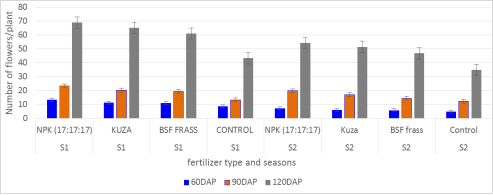
The number of fruits per strawberry plant was significantly (p ≤ 0.05) influenced by both season and fertilizer treatment at 60, 90, and 120 days after planting (DAP). During the short rains (Season 1), plants fertilized with NPK (17:17:17) consistently produced the highest leaf counts at all growth stages (13.27 at 60 DAP, 23.47 at 90 DAP, and 68.87 at 120 DAP), demonstrating superior performance compared to organic alternatives. Both KUZA (11.3, 20.32, and 65.07) and BSF frass (11.00, 19.57, and 61.00) treatments showed intermediate but statistically similar yields, while the plots that received no fertilizer (control) recorded the lowest productivity i.e. 8.67, 13.33, and 43.33 respectively (
Figure 1).
Figure 1. Effects of different fertilizers and seasons on the number leaves of strawberry.
In contrast, during the dry season (Season 2), the number of leaves were generally lower across all treatments, likely due to moisture stress. Nevertheless, NPK remained the most effective (7.27 at 60 DAP, 19.92 at 90 DAP, 54.17 at 120 DAP), followed by KUZA (6.13, 17.03, 51.40) and BSF frass (5.87, 14.54, 46.80). The plots that received no fertilizer performed the poorest (4.80, 12.22, 34.80). These results indicate that NPK (17:17:17) significantly enhances strawberry fruit yield in both seasons, though its advantage is more pronounced under favorable short rains. The organic amendments (KUZA and BSF frass) provided moderate but consistent yield benefits over the plots that received no fertilizer, suggesting their potential.
The number of leaves per plant is a critical indicator of vegetative growth in strawberries, directly influencing photosynthetic capacity and overall plant vigor. In this study, leaf production showed significant variation across different fertilizer treatments and seasons, indicating that both nutrient availability and environmental conditions are key factors influencing vegetative growth.
Strawberry plants treated with NPK (17:17:17) fertilizer consistently produced the highest number of leaves in both seasons. This can be attributed to the balanced and readily available supply of nitrogen, phosphorus, and potassium in NPK, which are vital for leaf growth and expansion. Nitrogen, in particular, plays a key role in chlorophyll formation and vegetative biomass production, resulting in vigorous foliage development
| [15] | Sabbadini, S.; Capocasa, F.; Battino, M.; Mazzoni, L.; Mezzetti, B (2021). Improved nutritional quality in fruit tree species through traditional and biotechnological approaches. Trends Food Science and Technology. 117, 125–138. |
[15]
. The performance of the KUZA organic fertilizer was in some cases comparable to NPK, suggesting its potential to support strong vegetative growth, especially when well-decomposed. Organic fertilizers such as KUZA also improve soil structure and stimulate microbial activity, which enhances nutrient availability over time
| [2] | Beesigamukama D., Mochoge B., Korir N. K., Fiaboe K. K. M., Nakimbugwe D., Khamis F. M., Subramanian S., Dubois T., Musyoka M. W., Ekesi S (2020). Exploring black soldier fly frass as novel fertilizer for improved growth, yield, and nitrogen use efficiency of maize under field conditions. Frontier in Plant Science 11: 574592. |
[2]
. However, plants treated with BSF frass produced a moderate number of leaves, likely due to its slower nutrient release and relatively lower nitrogen content compared to NPK. The control group, which received no fertilizer, consistently had the fewest leaves, emphasizing the importance of nutrient supplementation for healthy leaf development in strawberries.
Seasonal variation also significantly influenced leaf production. Generally, Season 1 recorded higher leaf counts than Season 2, possibly due to more favorable environmental factors such as temperature, sunlight, and soil moisture during the initial season. These findings align with reports which showed that strawberry vegetative growth is highly responsive to climatic conditions. Lower temperatures or reduced sunlight in Season 2 may have slowed photosynthesis and nutrient uptake, thereby reducing leaf formation
| [7] | Gold M., Von Allmen F., Zurbrügg C., Zhang J., Mathys A (2020). Identification of bacteria in two food waste black soldier fly larvae rearing residues. Front. Microbiology. 11: 582-867. |
[7]
.
The interaction between fertilizer type and season showed that while synthetic fertilizers like NPK offer immediate and consistent support for vegetative growth, organic fertilizers such as KUZA and BSF frass tend to release nutrients more slowly and may take longer to show their full benefits. In the long run, combining organic amendments with synthetic fertilizers could provide a more sustainable approach to enhancing leaf development and promoting overall plant health. Enhanced leaf growth not only enhances photosynthetic efficiency but also contributes to higher flower and fruit yields, reinforcing the importance of balanced fertilization in strawberry production systems.
3.2. Effect of Fertilizer Type and Season on Flower Production in Strawberry
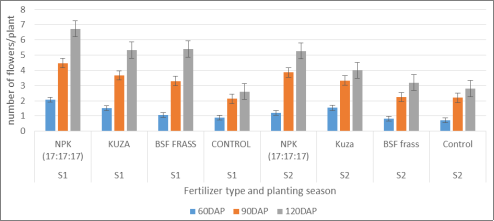
Figure 2. Effect of Season and Fertilizer Type on the Number of Flowers per Strawberry Plant at 60, 90, and 120 Days after Planting (DAP).
The number of flowers produced by strawberry plants was significantly influenced (p ≤ 0.05) by both fertilizer type and growing season (
Figure 2). NPK (17:17:17) consistently resulted in the highest flower counts at 60, 90, and 120 days after planting, particularly in Season 1, indicating its strong and immediate nutrient availability. KUZA and BSF frass, both organic fertilizers, supported moderate flowering, with BSF frass showing improved performance at later stages (120 DAP), suggesting a slower nutrient release pattern. Plots that received no fertilizer (control) recorded the lowest flower numbers across all stages and seasons, highlighting the essential role of fertilization in enhancing reproductive development in strawberries.
The number of flowers in strawberry plants is a key indicator of reproductive potential and yield. In this study, flower production was significantly affected by both fertilizer type and season at 60, 90, and 120 days after planting (DAP). The findings showed that NPK (17:17:17) consistently promoted flowering at all stages, while organic fertilizers like KUZA and BSF frass produced variable but encouraging results. At the early flowering stage (60 DAP), plants treated with NPK recorded the highest number of flowers, especially in Season 1 (2.07 flowers per plant). This can be linked to the immediate availability of key macronutrients nitrogen, phosphorus, and potassium which are essential for vigorous vegetative growth and timely floral initiation. Potassium, in particular, plays a crucial role in flower bud formation and reproductive efficiency. In comparison, plants under the control and BSF frass treatments had the lowest flower counts in both seasons. This suggests that organic fertilizers may need more time to decompose and release nutrients due to their reliance on microbial mineralization processes
| [2] | Beesigamukama D., Mochoge B., Korir N. K., Fiaboe K. K. M., Nakimbugwe D., Khamis F. M., Subramanian S., Dubois T., Musyoka M. W., Ekesi S (2020). Exploring black soldier fly frass as novel fertilizer for improved growth, yield, and nitrogen use efficiency of maize under field conditions. Frontier in Plant Science 11: 574592. |
[2]
.
Flower production reached its peak at 90 DAP across all treatments, with NPK-treated plants in Season 1 showing the highest counts (4.47 flowers per plant), followed by KUZA (3.67 flowers per plant) and BSF frass (3.30 flowers per plant). The improved performance of organic fertilizers at this stage likely reflects the gradual mineralization of nutrients, particularly in BSF frass, which contains slowly decomposing organic materials such as chitin
| [7] | Gold M., Von Allmen F., Zurbrügg C., Zhang J., Mathys A (2020). Identification of bacteria in two food waste black soldier fly larvae rearing residues. Front. Microbiology. 11: 582-867. |
[7]
. This finding reinforces the idea that organic fertilizers provide delayed yet sustained benefits for reproductive growth. The control plots consistently showed the lowest flower counts, highlighting the lack of sufficient nutrients to support flowering.
By 120 DAP, flower production was still highest in the NPK treatment (6.73 flowers per plant in Season 1), though BSF frass (5.40) and KUZA (5.33) showed comparable results. This suggests that organic fertilizers can help sustain flowering over a longer period. The use of organic manures enhance soil structure, microbial activity, and long-term nutrient availability; factors that collectively support extended flowering and fruiting. Interestingly, BSF frass outperformed KUZA in Season 1 at this stage, likely due to its gradual release of secondary nutrients and bioactive compounds that continue to benefit plant growth over time
| [1] | Akter, S., Haque, M. A., Islam, M. S. (2020). Effect of organic and inorganic fertilizers on the growth and yield of strawberry. Asian Journal of Agricultural and Horticultural Research, 6(2), 12–20. |
[1]
.
Seasonal variation had a significant influence on flower development. In most treatments, flower counts were higher in Season 1 than in Season 2, likely due to more favorable environmental conditions such as optimal temperature, adequate soil moisture, and sufficient sunlight. Similar patterns have been observed in strawberry production across various agro-ecological zones
| [17] | Zhang, Y., Dong, Y., & Wang, H. (2018). Climate variability and strawberry productivity: A case study. Field Crops Research, 225, 30–38. |
[17]
. The lower flower counts recorded in Season 2, especially in the BSF frass and control treatments, may be attributed to limited nutrient availability combined with less favorable weather conditions.
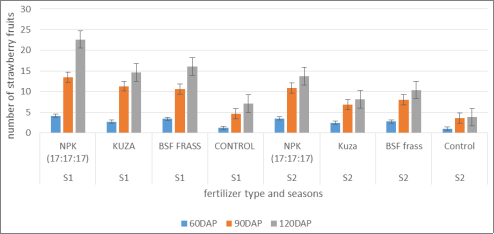
The study revealed significant differences in fruit number among the four fertilizer treatments across both seasons. Season 1 which received more rainfall produced better fruit set and higher yields compared to the drier Season 2. In both seasons, the NPK (17:17:17) treatment consistently resulted in the highest fruit counts, peaking at 22.64 fruits per plant at 120 DAP in Season 1, significantly surpassing the other treatments. The favorable moisture conditions during Season 1 likely enhanced nutrient uptake, flower retention, and fruit development. These results are consistent with previous reports that strawberry yields improve under well-irrigated conditions when inorganic fertilizers were applied
| [5] | El-Shazly, S. M., Abd El-Migeed, M. M. M., & Khalil, A. A. (2021). Effect of NPK fertilization on growth and fruiting of strawberry under Egyptian conditions. Middle East Journal of Agriculture Research, 10(3), 1012–1020. |
[5]
.
BSF frass and KUZA organic fertilizers also significantly increased fruit numbers compared to the control, though their performance was more affected by the drier conditions in Season 2. For example, KUZA dropped from 14.66 fruits in Season 1 to 8.17 in Season 2 at 120 DAP. The reduced soil moisture may have slowed microbial activity and nutrient release from the organic fertilizers, which are more reliant on microbial breakdown, a process limited in dry soils. The control treatment consistently yielded the fewest fruits, with the lowest being 3.83 at 120 DAP in Season 2, reaffirming the importance of nutrient input, especially under stress conditions.
These observations suggest that while NPK remains the most effective across varied climates, organic fertilizers like BSF frass and KUZA perform better in moist conditions and may require supplemental irrigation or rainfall to match the efficacy of synthetic options in dry seasons.
Figure 3. Effects of different fertilizers and seasons on the number of strawberry fruits.
3.3. Effect of Fertilizer Type and Season on Fruit Diameter and Yield of Strawberry
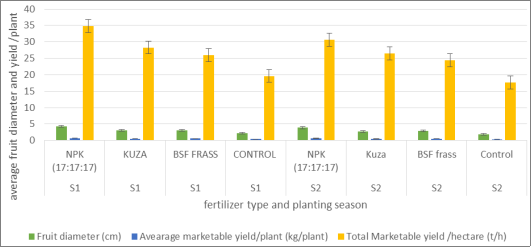
The results demonstrated that fertilizer type and seasonal variation significantly (p ≤ 0.05) influenced strawberry fruit diameter and yield. In both seasons (
Figure 3), plants treated with NPK (17:17:17) produced the heaviest fruits and the highest marketable yields per plant and per hectare, with peak performance observed in Season 1 (rainy season). BSF frass and KUZA fertilizers resulted in moderate yields, significantly higher than the control but lower than NPK. Notably, BSF frass outperformed KUZA in Season 1, suggesting its potential as a sustainable organic fertilizer. Across all treatments, yields were generally higher in Season 1 than in the drier Season 2, highlighting the impact of favorable climatic conditions on strawberry productivity. These findings highlight the potential of incorporating organic fertilizers such as BSF frass into strawberry production systems, particularly in situations where synthetic inputs are limited or when sustainable farming practices are prioritized.
Figure 4. Effects of different fertilizers and seasons on the average fruit diameter and yield of strawberry fruits.
The study showed that both fertilizer type and seasonal variation had a significant impact on strawberry fruit diameter and yield. Across both seasons, the application of NPK (17:17:17) fertilizer resulted in the largest fruit size and highest marketable yields per plant and per hectare, demonstrating its effectiveness in providing balanced macronutrients crucial for fruit development
Figure 4). These results align with previous studies, which found that balanced NPK fertilization enhances vegetative growth, increases fruit size, and boosts yields by improving nutrient availability and uptake
| [5] | El-Shazly, S. M., Abd El-Migeed, M. M. M., & Khalil, A. A. (2021). Effect of NPK fertilization on growth and fruiting of strawberry under Egyptian conditions. Middle East Journal of Agriculture Research, 10(3), 1012–1020. |
| [9] | Islam, M. T., Mele, M. A., Bahar, M. M., & Sabatino, L. (2020). Influence of nutrient management on strawberry yield and fruit quality: A review. Agronomy, 10(11), 1724. |
[5, 9]
.
Organic fertilizers, particularly BSF frass, demonstrated encouraging results, performing better than the control and occasionally matching KUZA in effectiveness. In Season 1, BSF frass even surpassed KUZA in total marketable yield, underscoring its potential as a reliable organic alternative under favorable weather conditions. BSF frass improves soil structure, microbial activity, and nutrient cycling, boosting plant growth and productivity. Its lower performance in Season 2 likely resulted from dry weather reducing nutrient mineralization and uptake, an issue more pronounced with organic fertilizers than with readily soluble synthetic ones
| [11] | Lalander C., Diener S., Zurbrügg C., Vinnerås B. (2019). Effects of feedstock on larval development and process efficiency in waste treatment with black soldier fly (Hermetia illucens) Journal of Cleaner Production; 208: 211–219. |
| [13] | Mulyono, S., Rachmawati, R., & Kristanto, A. W. (2022). Utilization of black soldier fly frass as a sustainable organic fertilizer: Impacts on soil fertility and crop yield. International Journal of Recycling of Organic Waste in Agriculture, 11, 347–356. |
[11, 13]
.
The consistently low performance of the control group in both seasons highlights the crucial importance of nutrient supplementation in strawberry cultivation. Moreover, the overall decline in fruit diameter and yield observed in Season 2 across all treatments underscores the influence of climatic factors particularly moisture availability on strawberry growth. The wetter conditions in Season 1 likely promoted better nutrient uptake and plant development, whereas the drier conditions in Season 2 limited both water and nutrient absorption. The yield responses observed in this study are consistent with earlier findings on genotypic variability in strawberry productivity. Genotypes such as Camarosa and Festival exhibit superior vegetative vigor, producing higher numbers of leaves, flowers, and fruits per plant, which ultimately translated into greater marketable yields. Their identification of Festival as the highest-yielding genotype (12.94 t/ha) provides a useful benchmark for evaluating the effectiveness of fertilizer treatments in enhancing the genetic potential of cultivated varieties. Although the Chandler variety evaluated in the present study differs from the genotypes improved nutrient availability particularly through NPK promotes stronger leaf development, enhanced flowering, and better fruit set, aligning with the genotype-driven yield enhancements
| [19] | Chowhan, S., Uddin, M. Z., Kakon, S. M., & Zaman, M. M. (2016). Yield performance of strawberry genotypes. Bangladesh Journal of Agricultural Research, 41(3), 481–489. https://doi.org/10.3329/bjar.v41i3.29720 |
[19]
.
In addition to yield traits, fruit quality also varies widely among strawberry genotypes. Quality attributes such as total soluble solids, vitamin C content, and mineral concentration differ markedly among cultivars, with some genotypes maintaining higher biochemical quality even during storage
| [19] | Chowhan, S., Uddin, M. Z., Kakon, S. M., & Zaman, M. M. (2016). Yield performance of strawberry genotypes. Bangladesh Journal of Agricultural Research, 41(3), 481–489. https://doi.org/10.3329/bjar.v41i3.29720 |
[19]
.
3.4. Effects of Different Fertilizers on Postharvest Quality of Strawberry Fruits
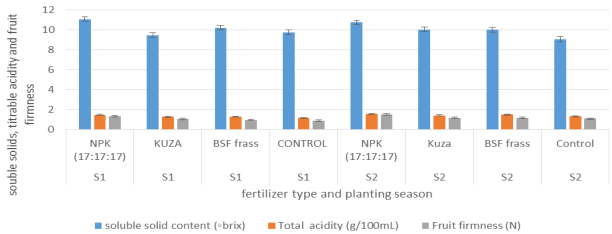
The soluble solid content (SSC), a key indicator of fruit sweetness and overall quality, varied noticeably across fertilizer treatments and seasons. Strawberries fertilized with NPK (17:17:17) recorded the highest SSC values (11.04 °Brix in Season 1 and 10.73 °Brix in Season 2), demonstrating its strong impact on sugar accumulation. In contrast, organic fertilizers such as BSF frass and Kuza produced moderate SSC levels, while the control treatment showed the lowest values, particularly in Season 2 (9.04 °Brix). Overall, these results suggest that NPK fertilizer is most effective in enhancing strawberry sugar content, though organic fertilizers also play a positive role in improving overall fruit quality.
The study revealed that total acidity in strawberry fruits was significantly affected by both fertilizer type and seasonal variation. Across the two seasons, total acidity ranged from 1.16% to 1.56%, with statistically significant differences (P ≤ 0.05) among treatments. Fruits treated with NPK (17:17:17) consistently exhibited the highest acidity levels in both seasons, peaking at 1.56% in Season 2. This suggests that inorganic fertilizers may enhance acid accumulation by stimulating nitrogen-driven vegetative growth and delaying fruit ripening. Similarly, the use of BSF frass resulted in relatively high acidity values (up to 1.50%), indicating its potential to replicate some effects of conventional fertilizers by enhancing soil nutrient cycling and microbial activity, which may influence organic acid synthesis in fruits. Fruits from the control and Kuza organic fertilizer treatments exhibited significantly lower total acidity, especially in Season 1. This indicates that the slower nutrient release from organic fertilizers may have accelerated fruit ripening and promoted faster acid breakdown.
Seasonal variation also had a noticeable effect, fruits from Season 2 showed higher total acidity across all treatments. This may be attributed to cooler temperatures and longer fruit development periods during that season, both of which are known to slow respiration and reduce the rate of acid metabolism. The results indicate that both fertilizer type and growing season have a strong impact on strawberry acidity which plays a key role in flavor and shelf life; optimizing fertilizer use can thus help meet market demands for high-acid fruits favored in processing and fresh markets.
Fruit firmness was also significantly influenced by fertilizer treatments and seasonal conditions, with values ranging from 0.88 to 1.54 N. Firmness is an essential quality attribute, as it affects the fruit’s ability to withstand handling, transport, and storage.
Strawberries grown with NPK (17:17:17) exhibited the highest firmness, particularly in Season 2 (1.54 N), followed by Season 1 (1.37 N). This suggests that inorganic fertilizers may enhance fruit cell wall strength and delayed softening, possibly due to improved calcium and potassium uptake which are vital for cell integrity. The use of BSF frass and Kuza organic fertilizers produced moderate firmness, especially in Season 2, indicating their potential to support acceptable fruit texture, likely through gradual nutrient release and improved soil health. However, the control treatments consistently showed the lowest firmness, particularly in Season 1 (0.88 N), reflecting poor nutrient availability that likely led to weaker cell structure and faster fruit softening. Additionally, fruits from Season 2 generally had higher firmness across all treatments compared to Season 1, suggesting that cooler or drier conditions in the second season may have delayed ripening and slowed cell wall breakdown. NPK and BSF frass improved fruit firmness compared to the control, and firmness was generally higher in Season 2, highlighting the combined effects of fertilizer type and seasonal climate on postharvest fruit quality.
Figure 5. Effect of Fertilizer Treatments and Season on Soluble Solids Content, Total Acidity, and Fruit Firmness of Strawberry Fruits.
The highest SSC (11.04°Brix) was recorded in NPK (17:17:17) treatment during Season 1, while the lowest (9.04°Brix) occurred in the control treatment during Season 2 (
Figure 5). The higher Brix values in the NPK treatment may be due to increased nitrogen and potassium availability, which stimulate photosynthesis and promote sugar buildup in the fruit
| [12] | Moustafa, Y. M., Fawzi, M. M., & Abo Sedera, F. A. (2022). Influence of potassium fertilization on yield and quality of strawberry. Scientia Horticulturae, 291, 110-597. |
[12]
. Synthetic fertilizers, particularly those with balanced NPK, enhance nutrient uptake and boost carbohydrate metabolism during fruit development, leading to greater sugar content
| [5] | El-Shazly, S. M., Abd El-Migeed, M. M. M., & Khalil, A. A. (2021). Effect of NPK fertilization on growth and fruiting of strawberry under Egyptian conditions. Middle East Journal of Agriculture Research, 10(3), 1012–1020. |
[5]
. BSF frass and Kuza organic fertilizers produced moderate SSC values (~9.99–10.20°Brix), indicating that organic sources can also support sugar accumulation, albeit more gradually due to their slower nutrient release patterns
| [1] | Akter, S., Haque, M. A., Islam, M. S. (2020). Effect of organic and inorganic fertilizers on the growth and yield of strawberry. Asian Journal of Agricultural and Horticultural Research, 6(2), 12–20. |
[1]
. The control plots, without fertilizer, resulted in consistently lower SSC values likely due to nutrient shortages affecting carbohydrate production and translocation to the fruits.
Seasonal effects were evident, with Season 1 generally producing higher SSC values compared to Season 2. This difference can be attributed to environmental factors. Higher solar radiation and lower humidity in Season 1 may have boosted photosynthesis and reduced water uptake, leading to higher sugar concentration in the fruit
| [16] | Zhang, J., Liu, J., & Zhou, H. (2022). Effect of seasonal climate variation on sugar accumulation in strawberries. Agronomy, 12(2), 365. |
[16]
. In contrast, the cooler temperatures and higher rainfall during Season 2 may have diluted sugars and slowed their accumulation due to reduced transpiration and lower light intensity. Other reports highlighted significant variation in fruit biochemical properties such as TSS, vitamin C, and sugars among genotypes, with BARI Strawberry-1 recording the highest TSS (15.83%). While genotype plays a major role in determining these attributes, the present study demonstrates that fertilizer inputs including organic sources like BSF frass—can further enhance fruit sweetness and acidity by improving nutrient translocation and metabolic activity. This supports the idea that both genotype and soil nutrition interact to shape fruit quality outcomes
| [18] | Chowhan, S., Uddin, M. Z., Kakon, S. M., & Zaman, M. M. (2016). Evaluation of nutritive value and shelf life of strawberry genotypes. Asian Journal of Medical and Biological Research, 2(1), 19–26. |
[18]
.
The highest total acidity (1.56%) was recorded in the NPK (17:17:17) treatment during Season 2, suggesting that synthetic fertilizers may increase acid content by promoting stronger vegetative growth and delaying full ripening. This aligns with reports that higher nitrogen levels can slow sugar accumulation while preserving organic acids
| [12] | Moustafa, Y. M., Fawzi, M. M., & Abo Sedera, F. A. (2022). Influence of potassium fertilization on yield and quality of strawberry. Scientia Horticulturae, 291, 110-597. |
[12]
. BSF frass also resulted in relatively high acidity levels (1.30–1.50, indicating that it can sustain acid levels similar to those achieved with synthetic fertilizers. This may be due to its slow nutrient release, which supports extended fruit development and delayed acid degradation
| [1] | Akter, S., Haque, M. A., Islam, M. S. (2020). Effect of organic and inorganic fertilizers on the growth and yield of strawberry. Asian Journal of Agricultural and Horticultural Research, 6(2), 12–20. |
[1]
. Kuza organic fertilizer resulted in moderate acidity (1.28–1.42%), while the control (no fertilizer) consistently produced the lowest acidity (1.16–1.34%), likely due to nutrient shortages that accelerated fruit ripening and organic acid breakdown.
In Season 2, acidity levels were higher across all treatments, indicating that climatic factors like low temperatures, reduced sunlight, or higher soil moisture may have slowed the breakdown of organic acids during growth. This aligns with studies which reported that seasonal conditions can affect acid metabolism, with cooler or cloudier weather often leading to higher organic acid levels in fruit
| [16] | Zhang, J., Liu, J., & Zhou, H. (2022). Effect of seasonal climate variation on sugar accumulation in strawberries. Agronomy, 12(2), 365. |
[16]
.
Fruit firmness is an important postharvest quality trait that influences how well fruits handle transport, shelf life, and how appealing they are to consumers. It depends on factors like cell wall composition, water content, and nutrient availability during growth. This study found clear differences in strawberry firmness among the fertilizer treatments, showing the crucial role that proper nutrient management plays in enhancing fruit structure and postharvest quality.
Strawberries treated with NPK (17:17:17) showed relatively high firmness in both seasons, which aligns with its role in enhancing calcium and potassium uptake key nutrients for strengthening cell walls and maintaining turgor pressure. Potassium enhances sugar movement and reinforces fruit tissue, reducing softening during ripening and storage. Similarly, BSF frass resulted in good fruit firmness, comparable to NPK, likely due to its balanced nutrient profile, including calcium and organic matter, which contribute to better soil health and nutrient availability. Additionally, the presence of chitin in frass stimulates plant defenses, further strengthening fruit tissue
| [2] | Beesigamukama D., Mochoge B., Korir N. K., Fiaboe K. K. M., Nakimbugwe D., Khamis F. M., Subramanian S., Dubois T., Musyoka M. W., Ekesi S (2020). Exploring black soldier fly frass as novel fertilizer for improved growth, yield, and nitrogen use efficiency of maize under field conditions. Frontier in Plant Science 11: 574592. |
[2]
.
Kuza fertilizer promoted satisfactory fruit development but resulted in slightly lower firmness compared to NPK and frass. This outcome is likely due to its distinct nutrient composition and the slower release of nutrients characteristic of organic fertilizers. Fruits from the control group were the softest, emphasizing the vital role of external nutrients particularly calcium and potassium in reinforcing cell wall strength. Inadequate nutrients can lead to softer fruits, as weakened cell structures and increased enzymatic activity accelerate tissue breakdown.





 Share This Article
 Twitter
 Linked In
 Facebook
 Copy
Copy Download