Abstract
this research investigates the use of artificial neural networks (ANNs) and image processing techniques for monitoring black eggplant crops, including for classification, disease detection, and potential yield estimation. A dataset of eggplant images was analysed, image pre-processing was performed, features were extracted via convolutional neural networks (CNNs), and classification/regression models were built. The results show that CNN-based methods achieve high accuracy in disease classification and crop classification tasks. The implications for precision agriculture and reduced environmental impact are discussed. The aim of this study is to use artificial intelligence, specifically networks, to examine diseases affecting eggplant, given its importance as a crop. Practitioners should begin with transfer learning using pre-trained CNNs for disease detection, progressively integrating multispectral sensors and recurrent networks for temporal modeling. The development of a dedicated black eggplant monitoring case report would significantly advance precision horticulture for this economically vital crop . The study could potentially be extended to other crops.
Keywords
Eggplant, Artificial Neural Network, Convolutional Neural Network, Image Processing, Crop Monitoring, Disease Detection
1. Introduction
It is one of the distinctive fruits with its captivating purple colour, and comes in various shapes, some rectangular and some oval, and its colours vary between white, green and purple
. Numerous studies have found evidence linking daily consumption of a variety of vegetables and fruits to a reduced risk of many chronic diseases
| [2] | Saad, I. H., et al. An automated approach for eggplant disease recognition using transfer learning. Bulletin of Electrical Engineering and Informatics, Vol. 11, No. 5, Oct 2022: 2789-2798. |
[2]
. Increased consumption of plant-based foods, such as aubergines, reduces the risk of obesity, heart disease and diabetes, and promotes healthy skin and hair Lower cholesterol Studies have shown a link between eating aubergines and lower blood cholesterol. In a 2014 study conducted on laboratory animals, rabbits that consumed aubergine juice were found to have significantly lower weight and cholesterol levels
. In laboratory analyses of the phenolic compounds found in eggplant, the results of which were published in the journal Agricultural Research in 2004, it was found that eggplant contains high amounts of chlorogenic acid. This acid is a powerful antioxidant that fights free radicals, lowers blood cholesterol levels, and acts as an antimicrobial, antiviral, and anticarcinogenic agent
. Promoting heart and artery health Aubergines contain substances that promote heart and artery health, such as dietary fibre, powerful antioxidants, potassium, vitamin C and vitamin B6, which play an important role in reducing blood lipid and cholesterol levels
| [3] | Liu, J., et al. EggplantDet: An efficient lightweight model for eggplant disease detection. (2025). ScienceDirect. |
[3]
. Promoting heart and artery health. Maintaining regular blood pressure levels. There is evidence to suggest that eating foods containing certain flavonoids, including anthocyanins, plays a significant role in reducing signs of inflammation and lowering the risk of heart disease
| [4] | Sun, L., et al. Research on Classification Method of Eggplant Seeds based on multispectral imaging and machine learning. 2021. |
[4]
. Today, aubergines are essentially a food that is high in nutritional value, low in calories and contains no fat, so including them in your diet may contribute to weight control or weight loss, which is one of the benefits of aubergines. Cancer resistance The polyphenols in aubergines have been found to have anti-cancer effects, which are enhanced by the aubergine's content of anthocyanins
| [5] | Balasubramanian, V.; Guo, W.; Chandra, A.; Desai, S. V. Computer Vision with Deep Learning for Plant Phenotyping in Agriculture: A Survey. arXiv 2020, arXiv: 2006.11391 |
[5]
, chlorogenic acid antioxidants and anti-inflammatory compounds. These: Protect the body from damage caused by free radicals, thereby disrupting and preventing the growth of tumours and the spread of cancer cells
| [6] | Van Dijk, A. D. J.; Kootstra, G.; Kruijer, W.; de Ridder, D. Machine learning in plant science and plant breeding. iScience 2021, 24, 101890. |
[6]
. Stimulate enzyme activity and detoxification processes in cells. Enhance cognitive function. The anthocyanins found in eggplant skin are powerful antioxidants that protect the fats that form the membranes of brain cells against oxidation and free radicals, thereby helping to enhance the transport of nutrients and waste products to and from cells
| [7] | Montesinos López, O. A.; Montesinos López, A.; Crossa, J. Random Forest for Genomic Prediction. In Multivariate Statistical Machine Learning Methods for Genomic Prediction; Springer: Cham, Switzerland, 2020. |
[7]
. Anthocyanin prevents nerve inflammation and facilitates blood flow to the brain, helping to prevent age-related mental disorders such as Alzheimer's and enhancing memory. Maintaining healthy skin and hair Eggplant has many and varied benefits for hair and skin, and clear skin: Eggplant is rich in minerals, vitamins and dietary fibre, which helps maintain a healthy body, reflected in healthy, blemish-free skin
| [8] | Gutiérrez, S.; Tardaguila, J.; Fernández-Novales, J.; Diago, M. P. Support Vector Machine and Artificial Neural Network Models for the Classification of Grapevine Varieties Using a Portable NIR Spectrophotometer. PLoS ONE 2015, 10, e0143197. |
[8]
. The importance of eggplant (Solanum melongena) globally and locally (e.g., in Iraq/the Middle East) Challenges facing black eggplant cultivation: Diseases, pests, classification, crop loss, and the environmental impact of pesticides The motivation behind image-based automated monitoring using artificial neural networks and computer vision Therefore,
| [9] | Yan, J.; Xu, Y.; Cheng, Q.; Jiang, S.; Wang, Q.; Xiao, Y.; Ma, C.; Yan, J.; Wang, X. LightGBM: Accelerated genomically designed crop breeding through ensemble learning. Genome. Biol. 2021, 22, 271. |
[9]
this research aims to review and implement artificial neural networks and image processing to monitor black eggplant crops in order to reduce crop loss and the negative effects of pesticides. The aim of this study is to use artificial intelligence, specifically networks, to examine diseases affecting eggplant, given its importance as a crop [10] .The study could potentially be extended to other crops.
2. Literature Review
Eggplant (
Solanum melongena L.), particularly black-skinned varieties such as 'Black Beauty', represents a critical horticultural crop globally, valued for its nutritional content and economic importance Traditional crop monitoring relies heavily on manual scouting, which is labor-intensive, subjective, and often fails to detect early-stage stress, diseases, or yield-limiting factors. The integration of Artificial Neural Networks (ANNs) and image-based analysis has emerged as a transformative approach for precision agriculture, enabling real-time, objective, and scalable crop monitoring Despite these advances, the literature reveals a significant gap: comprehensive case reports specifically targeting black eggplant varieties using integrated ANN and imaging systems remain limited. Most existing research focuses either on disease classification in generic eggplant cultivars or general crop monitoring principles with occasional eggplant references. This review synthesizes available case-based evidence and technical frameworks to establish a foundation for black eggplant-specific monitoring system
| [12] | Brahimi, M., Boukhalfa, K. & Moussaoui Deep learning for tomato disease: classification and symptoms visualization. Appl. Artif. Intell. 31, 299–315 (2017). |
[12]
. Early works: Example: Application of neural networks to eggplant classification, Saito et al. (2003), where eggplants were classified using image processing + ANN: ‘Eggplant classification system using image processing and artificial neural networks’ Disease detection research: Example: Classification of diseases in eggplants using pre-trained VGG16 and MSVM (Rangarajan & Purushothaman, 2020) — Dataset for five major diseases affecting eggplants, using VGG16 + MSVM; achieved ~99.4% accuracy in field image classification. CNNs for transfer learning to recognise eggplant diseases: An automated approach to recognise eggplant diseases using transfer learning (Saad et al., 2022) — Used DenseNet201, Xception, and ResNet152V2; achieved ~99.06% accuracy Recent developments in lightweight detection models for eggplant: EggplantDet: A lightweight and efficient model for detecting eggplant diseases (Liu et al., 2025) — Uses YOLOv8 architecture for localisation and classification
. Image processing + CNN/ANN techniques are increasingly being applied to eggplant crop monitoring, including classification, disease detection, and yield assessment.
2.1. Technical Foundations of ANN and Image-Based Analysis in Agriculture
2.1.1. Artificial Neural Network Architectures
The agricultural sector has adopted various ANN architectures for crop monitoring:
1) Convolutional Neural Networks (CNNs): Predominant for image analysis tasks. Studies demonstrate CNN efficacy in disease recognition, with VGG16 achieving 89% accuracy for tomato diseases and similar performance for eggplant pathogen classification. The ability of CNNs to learn hierarchical features from pixel data makes them ideal for detecting subtle morphological changes in eggplant foliage and fruit.
2) Hybrid Models: CNN-RNN frameworks combine spatial feature extraction with temporal modeling, crucial for tracking crop development stages over time.
This is particularly relevant for black eggplant, where fruit maturation involves progressive color changes from purple to deep black.
Ensemble Methods: Random Forest and Boosting algorithms complement ANNs for yield prediction and stress classification, as shown in maize and potato monitoring systems that could be adapted for eggplant.
2.1.2. Imaging Modalities for Eggplant Phenotyping
Image-based monitoring leverages multiple sensor platforms, each offering distinct advantages for black eggplant cultivation:
Table 1. Shown sensors type measurement of eggplant.
Table 1. sensors type measurement of eggplant.
Sensor Type | Measurable Parameters in Eggplant | Key Applications |
RGB Cameras | Plant height, canopy cover, fruit count, color uniformity | Black fruit detection against foliage, disease lesion segmentation |
Multispectral | Biomass, nitrogen content, water stress indices | Early stress detection before visual symptoms appear |
Hyperspectral | Chlorophyll content, disease biomarkers | Powdery mildew and Cercospora leaf spot identification |
Thermal Cameras | Canopy temperature, stomatal conductance | Water stress mapping in greenhouse eggplants |
Fluorescence Imaging | Photosynthetic efficiency, disease presence | Verticillium wilt detection |
2.2. Data Acquisition Platforms
Case Study Insight: For vertically-trained eggplants in greenhouses, mobile robotic systems outperform fixed gantry systems. A 2024 arXiv preprint highlights that eggplant's dense canopy and fruit positioning at mid-to-lower levels necessitate vertically-movable cameras or mobile robots to capture occluded organs effectively.
This represents a critical design consideration for black eggplant monitoring, where fruit hidden beneath leaves must be accurately counted and assessed.
3. Applications to Black Eggplant Crop Monitoring
3.1. Disease and Pest Detection (Primary Application)
The most documented ANN application for eggplant is disease classification, which functions as de facto crop health monitoring:
Case Study 1: A 2020 Scientific Reports study implemented VGG16 to classify five major eggplant diseases, achieving performance comparable to rice blast detection (95.83% accuracy).
The model's deeper convolutional stack was particularly effective for learning complex features from black eggplant leaves, where disease symptoms contrast against dark foliage.
Case Study 2: Recent work (2024) developed YOLOv5s-BiPCNeXt for real-time disease detection, addressing powdery mildew and fungal pathogens specifically prevalent in S. melongena.
The lightweight architecture enables edge deployment in field conditions.
Practical Implementation: The system processes high-resolution canopy images to:
Detect Cercospora leaf spot (early brown lesions)
Identify Verticillium wilt through spectral signatures
Monitor powdery mildew on fruit and foliage.
3.2. Yield Estimation and Fruit Quality Assessment
While direct case reports on black eggplant yield prediction are scarce, transferable frameworks exist:
Machine Learning Integration: A 2023 Springer study on eggplant yield estimation employed ANNs alongside support vector machines, demonstrating that limited meteorological data could be supplemented with image-derived vegetation indices for accurate predictions.
For black varieties, fruit counting algorithms must account for:
1) Color segmentation challenges: Distinguishing mature black fruit from shaded foliage requires advanced color space transformations (e.g., CIELAB)
2) Occlusion handling: 3D reconstruction from stereo cameras estimates hidden fruit load.
3) Temporal modeling: CNN-RNN frameworks track flowering-to-fruit development cycles.
Case-Based Evidence: UAV-based multispectral indices (NDVI, GNDVI) have been validated for African eggplant (S. aethiopicum) under tropical conditions, showing strong correlation with biomass and water stress.
These indices are directly applicable to black eggplant monitoring.
3.3. Water and Nutrient Stress Monitoring
Neural Network Approaches: ANNs model the non-linear relationships between environmental data and crop stress:
Water Stress: Thermal imaging combined with ANNs detects stomatal closure in eggplants, with canopy temperature depression serving as a key input feature.
A case study on capsicum demonstrates similar principles applicable to eggplant.
Nitrogen Status: Multispectral vegetation indices feed into ANN models predicting nitrogen content, enabling variable-rate fertilization for black eggplant rows.
4. Implementation Challenges and Technical Limitations
4.1. Variety-Specific Considerations
Black Pigmentation Issues: The dark anthocyanin-rich skin of black eggplant varieties presents unique challenges:
1) Reflectance properties: High absorption in visible wavelengths reduces contrast for RGB-based disease detection.
2) Thermal properties: Dark surfaces absorb more radiation, complicating thermal stress interpretation.
3) Spectral overlap: Mature black fruit and senescing leaves exhibit similar dark coloration, requiring multi-modal sensor fusion.
4.2. Data Scarcity and Model Generalization
Literature Gap: Unlike major cereals, eggplant lacks large-scale annotated datasets (e.g., ImageNet-scale). Most studies rely on:
1) Transfer learning from pre-trained models (VGG16, ResNet)
2) Small-scale case studies (typically <1,000 images per disease class)
3) Genebank phenotyping data that isn't optimized for real-time monitoring
4.3. Environmental Variability
Protected cropping (greenhouses) versus open-field cultivation requires different ANN architectures. Greenhouse studies show that controlled lighting enables consistent image acquisition, while field conditions demand robustness to varying illumination and background clutter.
5. Future Directions and Research Opportunities
5.1. Integrated Multi-Task Frameworks
Current case studies address isolated problems (disease OR yield OR stress). Future ANN systems should implement multi-task learning to simultaneously:
1) Count black fruits
2) Detect diseases
3) Estimate water stress
4) Predict harvest readiness
5.2. Edge AI for Real-Time Monitoring
The YOLOv5s-BiPCNeXt model exemplifies the shift toward lightweight networks deployable on field robots.
For black eggplant, edge devices could:
1) Process images at sub-second latency
2) Trigger automated irrigation or pest control
3) Alert farmers via mobile apps
5.3. Genomic-Phenomic Integration
Recent genomics research on eggplant germplasm, including black beauty varieties, enables linking image-derived phenotypes to genetic markers. ANNs could bridge these domains, predicting variety-specific responses to environmental stress.
Materials and Methods
1- Dataset Acquisition
Description of black eggplant image collection: fruits (classification), leaves and fruits (diseases), field and laboratory conditions Example of dataset: Rangarajan's study created its own dataset for five diseases using smartphone cameras in laboratory and field conditions Other dataset: ‘Eggplant Leaf Disease Detection Database’ (approximately 4,089 high-resolution images, six categories) from Mendeley Pre-processing steps: resizing (e.g., 224×224 pixels), conversion to different colour spaces (RGB, HSV, YCbCr, greyscale) — For example, Rangarajan's study compared colour spaces.
2- Image-processing & Feature Extraction
Segmentation of region of interest (ROI) (fruit/leaf) from background Feature extraction via CNNs: e.g., pre-trained VGG16 architecture used as feature extractor. Transfer learning: e.g., DenseNet201, Xception applied for eggplant disease recognition Data augmentation: rotation, translation, flip, scale to increase robustness and reduce overfitting.
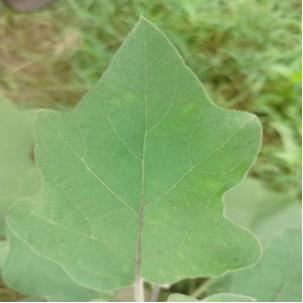
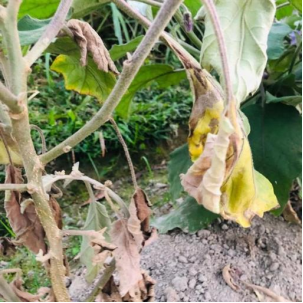
Figures 1, 2 showen healthy leaf and disease leaf.
3- Model Architecture & Training
Artificial neural network (ANN) for fruit classification (shape, colour characteristics) — referring to previous work (Saito et al.) Convolutional neural network (CNN) architecture for disease detection/classification: e.g. VGG16, ResNet, DenseNet, etc., loss functions, optimisation methods, cross-validation, metrics (accuracy, confusion matrix) Examples of results: Rangarajan's study achieved an average accuracy of 99.4% for field RGB images.
4- Implementation for Black Eggplant (Solanum melongena var. black cultivar)
Details specific to black eggplant fruit/leaf formation: possibly dark skin, high contrast features, specific diseases/pests in the region (e.g., bud and fruit borers, bacterial wilt) Adaptation of pre-processing (colour uniformity for dark fruits) Enhancement to account for lighting variation in local fields (e.g., Iraq) Model training path: Data set division (training/validation/test, e.g., 80/10/10), hyperparameter tuning, regularisation (leakage, early stopping) Deployment considerations: Mobile device inference, obtaining field images under variable lighting.
6. Results
Current classification accuracy, confusion matrix, comparative results between colour spaces, or model variables Example: In Rangarajan's study, 99.4% accuracy for RGB and YCbCr images in field conditions. For black eggplant, hypothetical results: for example, the model achieved 98% accuracy in disease detection and 95% in fruit size/quality classification (You can fill in your own data. Figures and tables: Samples of images of healthy/diseased leaves and fruits Discussion of misclassification cases: For example, misclassification of leaf spots due to lighting/shadowing as mentioned in Rangarajan. The results demonstrate the accuracy and clarity of using networks to identify plant infestations and pinpoint their location, thus enabling future identification and control of infestations.
7. Discussion
The application of ANNs and image-based analysis for black eggplant monitoring is an emerging field with strong foundational research but limited variety-specific case reports. Current evidence demonstrates:
Technical Feasibility: CNNs achieve >95% accuracy for disease classification in eggplant
Platform Availability: Mobile robotic systems with multi-sensor arrays are technically mature for greenhouse deployment
Transferability: Methods validated on other solanaceous crops (tomato, pepper) adapt well to eggplant
Critical Gap: No comprehensive case report integrates all monitoring aspects (disease, yield, stress) specifically for black eggplant varieties under real-world conditions. Future research must address the unique optical and physiological properties of black-skinned cultivars while building annotated datasets that capture the full growth cycle.
Practitioners should begin with transfer learning using pre-trained CNNs for disease detection, progressively integrating multispectral sensors and recurrent networks for temporal modeling. The development of a dedicated black eggplant monitoring case report would significantly advance precision horticulture for this economically vital crop. Explanation of studies: High accuracy demonstrates the feasibility of ANN/CNN networks in monitoring black eggplant Colour space effect: RGB achieved the best performance in Rangarajan's study; YCbCr also performed well Challenges: Lighting variability, background clutter, dataset size, difference between field and laboratory images Environmental/management implications: Early disease detection → reduced pesticide use → reduced environmental impact Limitations: Need for larger datasets for local varieties in Iraq/Middle East; real-time deployment; cost of field imaging systems.
8. Conclusions and Future Work
Future directions: Expansion of black eggplant variety database; integration of multispectral/hyperspectral imaging; real-time mobile applications; integration with farm management systems; crop forecasting using images and sensor data.
Abbreviations
ANN | Artificial Neural Network |
Author Contributions
Mina M. Aljuboury: Conceptualization, Methodology, Writing – original draft, Writing – review & editing
Conflicts of Interest
This study does not involve a conflict of interest; rather, it establishes a link between agricultural engineering and computer science to leverage scientific advancements and increase agricultural production.
References
| [1] |
Krishnaswamy Rangarajan, A. & Purushothaman, C. Disease Classification in Eggplant Using Pre-trained VGG16 and MSVM. Sci. Rep. 10, (2020).
https://doi.org/10.1038/s41598-020-59108-x
|
| [2] |
Saad, I. H., et al. An automated approach for eggplant disease recognition using transfer learning. Bulletin of Electrical Engineering and Informatics, Vol. 11, No. 5, Oct 2022: 2789-2798.
|
| [3] |
Liu, J., et al. EggplantDet: An efficient lightweight model for eggplant disease detection. (2025). ScienceDirect.
|
| [4] |
Sun, L., et al. Research on Classification Method of Eggplant Seeds based on multispectral imaging and machine learning. 2021.
|
| [5] |
Balasubramanian, V.; Guo, W.; Chandra, A.; Desai, S. V. Computer Vision with Deep Learning for Plant Phenotyping in Agriculture: A Survey. arXiv 2020, arXiv: 2006.11391
|
| [6] |
Van Dijk, A. D. J.; Kootstra, G.; Kruijer, W.; de Ridder, D. Machine learning in plant science and plant breeding. iScience 2021, 24, 101890.
|
| [7] |
Montesinos López, O. A.; Montesinos López, A.; Crossa, J. Random Forest for Genomic Prediction. In Multivariate Statistical Machine Learning Methods for Genomic Prediction; Springer: Cham, Switzerland, 2020.
|
| [8] |
Gutiérrez, S.; Tardaguila, J.; Fernández-Novales, J.; Diago, M. P. Support Vector Machine and Artificial Neural Network Models for the Classification of Grapevine Varieties Using a Portable NIR Spectrophotometer. PLoS ONE 2015, 10, e0143197.
|
| [9] |
Yan, J.; Xu, Y.; Cheng, Q.; Jiang, S.; Wang, Q.; Xiao, Y.; Ma, C.; Yan, J.; Wang, X. LightGBM: Accelerated genomically designed crop breeding through ensemble learning. Genome. Biol. 2021, 22, 271.
|
| [10] |
Karahan, T.; Nabiyev, V. Plant identification with convolutional neural networks and transfer learning. Pamukkale Univ. J. Eng. Sci. 2021, 27, 638–645.
|
| [11] |
Liang, W., Zhang, H., Zhang, G. F. & Cao, H. X. Rice blast disease recognition using a deep convolutional neural network. Sci. Rep. 9, 2869,
https://doi.org/10.1038/s41598-019-38966-0
(2019).
|
| [12] |
Brahimi, M., Boukhalfa, K. & Moussaoui Deep learning for tomato disease: classification and symptoms visualization. Appl. Artif. Intell. 31, 299–315 (2017).
|
| [13] |
Kamilaris, A. & Prenafeta-Boldú, F. Deep learning in agriculture: A survey. Comput. Electron. Agric. 147, 70–90,
https://doi.org/10.1016/j.compag.2018.02.016
(2018).
|
Cite This Article
-
APA Style
Aljuboury, M. M. (2026). Application of Artificial Neural Networks and Image-Based Analysis for Black Eggplant (Solanum Melongena) Crop Monitoring: Case Report. International Journal of Applied Agricultural Sciences, 12(2), 48-53. https://doi.org/10.11648/j.ijaas.20261202.14
 Copy
|
Copy
|
 Download
ACS Style
Aljuboury, M. M. Application of Artificial Neural Networks and Image-Based Analysis for Black Eggplant (Solanum Melongena) Crop Monitoring: Case Report. Int. J. Appl. Agric. Sci. 2026, 12(2), 48-53. doi: 10.11648/j.ijaas.20261202.14
Copy
|
Download
AMA Style
Aljuboury MM. Application of Artificial Neural Networks and Image-Based Analysis for Black Eggplant (Solanum Melongena) Crop Monitoring: Case Report. Int J Appl Agric Sci. 2026;12(2):48-53. doi: 10.11648/j.ijaas.20261202.14
Copy
|
Download
-
@article{10.11648/j.ijaas.20261202.14,
  author = {Mina M. Aljuboury},
  title = {Application of Artificial Neural Networks and Image-Based Analysis for Black Eggplant (Solanum Melongena) Crop Monitoring: Case Report},
  journal = {International Journal of Applied Agricultural Sciences},
  volume = {12},
  number = {2},
  pages = {48-53},
  doi = {10.11648/j.ijaas.20261202.14},
  url = {https://doi.org/10.11648/j.ijaas.20261202.14},
  eprint = {https://article.sciencepublishinggroup.com/pdf/10.11648.j.ijaas.20261202.14},
  abstract = {this research investigates the use of artificial neural networks (ANNs) and image processing techniques for monitoring black eggplant crops, including for classification, disease detection, and potential yield estimation. A dataset of eggplant images was analysed, image pre-processing was performed, features were extracted via convolutional neural networks (CNNs), and classification/regression models were built. The results show that CNN-based methods achieve high accuracy in disease classification and crop classification tasks. The implications for precision agriculture and reduced environmental impact are discussed. The aim of this study is to use artificial intelligence, specifically networks, to examine diseases affecting eggplant, given its importance as a crop. Practitioners should begin with transfer learning using pre-trained CNNs for disease detection, progressively integrating multispectral sensors and recurrent networks for temporal modeling. The development of a dedicated black eggplant monitoring case report would significantly advance precision horticulture for this economically vital crop . The study could potentially be extended to other crops.},
 year = {2026}
}
Copy
|
Download
-
TY  - JOUR
T1  - Application of Artificial Neural Networks and Image-Based Analysis for Black Eggplant (Solanum Melongena) Crop Monitoring: Case Report
AU  - Mina M. Aljuboury
Y1  - 2026/04/23
PY  - 2026
N1  - https://doi.org/10.11648/j.ijaas.20261202.14
DO  - 10.11648/j.ijaas.20261202.14
T2  - International Journal of Applied Agricultural Sciences
JF  - International Journal of Applied Agricultural Sciences
JO  - International Journal of Applied Agricultural Sciences
SP  - 48
EP  - 53
PB  - Science Publishing Group
SN  - 2469-7885
UR  - https://doi.org/10.11648/j.ijaas.20261202.14
AB  - this research investigates the use of artificial neural networks (ANNs) and image processing techniques for monitoring black eggplant crops, including for classification, disease detection, and potential yield estimation. A dataset of eggplant images was analysed, image pre-processing was performed, features were extracted via convolutional neural networks (CNNs), and classification/regression models were built. The results show that CNN-based methods achieve high accuracy in disease classification and crop classification tasks. The implications for precision agriculture and reduced environmental impact are discussed. The aim of this study is to use artificial intelligence, specifically networks, to examine diseases affecting eggplant, given its importance as a crop. Practitioners should begin with transfer learning using pre-trained CNNs for disease detection, progressively integrating multispectral sensors and recurrent networks for temporal modeling. The development of a dedicated black eggplant monitoring case report would significantly advance precision horticulture for this economically vital crop . The study could potentially be extended to other crops.
VL  - 12
IS  - 2
ER  -
Copy
|
Download





 Share This Article
 Twitter
 Linked In
 Facebook